break the stigma: tips for talking about mental health
Mental health feels so nuanced and extremely difficult to talk about.
It’s something so many people struggle with, but why do I feel embarrassed and frightened that someone will look at me differently if I tell them what goes on in my head and how miserable I feel some days?
Mental health is so difficult to talk about because it feels like no one gets how you’re feeling. Break the stigma behind mental health by talking about it to others and not downplaying your feelings and emotions.
And sometimes you feel so helpless when other people are struggling too. I want others to feel okay. I want others to be more mentally stable than I am.
I want better for everyone around me because I just can’t imagine my family and friends having to go through intense battles with their minds. No one should.
But I also understand the importance of getting my own help.
So I pose the question: how do you accept and help others through mental health struggles while also struggling yourself?
breaking the stigma by talking about mental health
talk about your own experiences
Finding out one of my siblings was struggling with mental health struck me so hard. I wanted to approach the situation by discussing my own struggles with mental health.
I explained that it was okay and unfortunately something that I can relate to on a certain scale. They didn’t talk much, but they listened. And that was all I could ask for, in the hopes that starting a conversation about mental health would help.
Although you may not have all the answers, offering your own experiences may be more helpful than you realize.
But make sure to let them have the floor, and don’t fully take over the conversation if they have something to say as well. Try to be open to their thoughts and feelings, even if you don’t agree.
don’t downplay your emotions and feelings
I think there’s also a problem in our society and culture where we sometimes think of mental health as something quirky and use phrases like “ugh I’m so depressed” or “haha I’m feeling so manic” lightly.
Like no, this is serious.
These are intense things that people are going through, and it’s not something to make you look “cool” or to get attention.
I think it can be hard for me to dive deeper into why I’m feeling a certain way or how serious what’s going on is. Maybe it stems from not wanting people to feel bad for me because I can’t stand the constant check ins or random calls.
If I’m going through a “depressive episode” or feeling all over the place, I truly need to be alone.
I can’t talk about it. I can’t explain how I feel or I’ll cry or shut down (depending on the situation.) If I’m feeling depressed, I can barely get out of bed or take a shower unless I’m going to work, let alone answer your calls and try to convince you I’m fine.
“I’m fine,” I say deadpanned.
“No really. I’m okay,” I try to be a little more convincing.
Believe me, haha, please because I can’t deal with the looks of worry or the blaming themselves.
I’m well in my twenties, no one is responsible for me other than myself. It’s a sad thought in my lonely moments, but reassuring that I’m not “bothering” anyone with my mental health lows.
additional content: little habits that make bad mental health days lighter
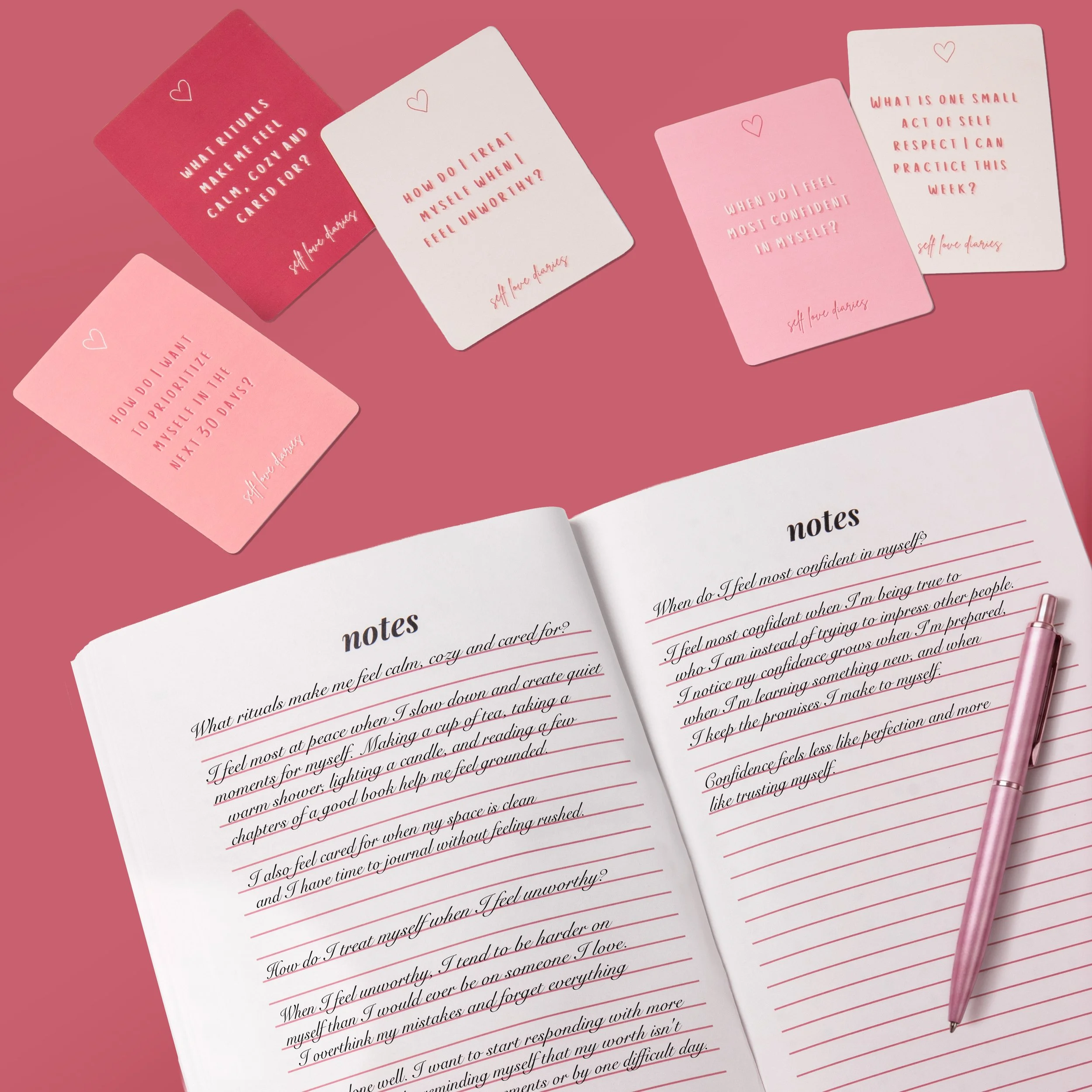
the self love essentials.
the Self Love Daily Journal and Journal Prompt Cards Deck is the ultimate bundle to boost your self love journey! this thoughtfully curated set makes it easy to reflect, grow and prioritize yourself every day.
remember you’re human
It’s just so damn hard talking about mental health. But remember you’re human, and many people are going through similar situations right now.
It’s so hard to talk about mental health because it feels like no one gets how you’re feeling, and you fear they may judge, belittle, or try to fix you.
They may try to come up with solutions, whether it’s medication, therapy, life changes, more self love, etc. But maybe all you need is someone to listen to how shitty you feel without asking questions.
Maybe all you need is someone to tell you they’re there for you, even if you never end up needing them.
journal about your mental health
When talking to others about your mental health hardships seems scary, try having those honest conversations with yourself.
Journaling about your mental health allows you to express your emotions, moods and feelings without the fear of judgement from others.
It also give you opportunities to explore and keep track of your mental wellbeing, negative or positive patterns you’re noticing and ways to cope with triggers and relapses.
Here are some journal prompts to use to help you break the stigma behind mental health:
What are three small things I can do today to nurture my mental health and wellbeing?
What thoughts have been causing me the most stress, and how can I challenge their validity?
When was the last time I felt overwhelmed, and what helped me get through it?
How can I practice being more patient with myself during difficult mental health days?
What is something I can do today that would make me feel emotionally supported?
How can I create a mental health toolbox with coping mechanisms that work for me?
How do I feel about asking for help, and how can I improve my comfort level with seeking support?
What are the signs that I need to take a mental health break, and how can I prioritize rest?
How do I celebrate progress in my mental health, even if it feels like baby steps?
read more: 25 journal prompts for mental health
mental health emergency resources
suicide & crisis lifeline: call or text 988
maternal mental health: call or text 1-833-TLC-MAMA (833-852-6262)
disaster distress helpline: call or text 1-800-985-5990.
in life-threatening situations, call 911 or go to the nearest emergency room
Take care & I love you all.